Just Tell Me No
The Professional Courtesy That Nobody Practices Anymore
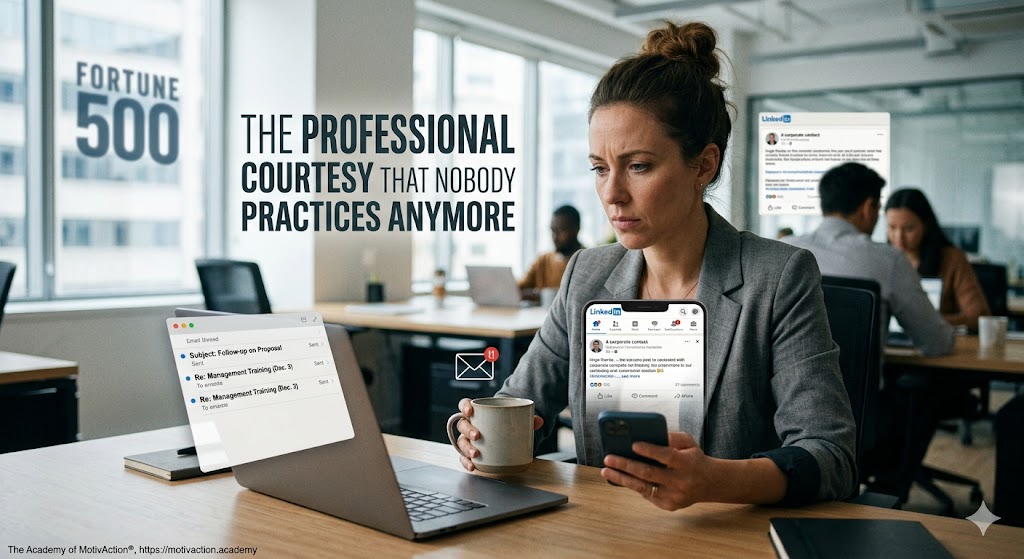
I was scrolling LinkedIn this morning, drinking my hot water, grounding into my routine. And I saw a post from someone I've been trying to reach for months.
It triggered me.
Not because they posted. Because they had time to post on LinkedIn but not time to send a ten-second email that would answer the question I've been asking since December.
Is it a no? Is it not the right time? Are you still interested?
Just tell me.
The Year-Long Conversation
We've been in contact with this corporate client for over a year. Fortune 500 company. Europe-based. Conversations with VPs, decision-makers, multiple departments.
They wanted management-level training. They wanted to partner with us to support first responder training in their local community. The conversations were good. The interest seemed real.
And then it went silent.
Not silent like "we're thinking about it." Silent like nobody's replying to emails.
So I did what you do when you're not getting responses. I copied a high-level person who originally brought us in. Within 30 minutes, I got a reply.
"Oh, we've been busy. Let's bring this person in for a decision. We'll circle back in December."
Since December, I've followed up. Two emails. Three emails. Polite. Professional. Not pushy.
"Just let me know. I want to close the loop. If now is not the right time, I'll stop bothering you. Let's save everybody's time."
No answer.
The Dinner Conversation
A few months before that, they were in town. They invited us to dinner. I sat next to one of the key decision-makers. Lovely woman. Warm. Engaging.
She asked us,
"What's your biggest challenge right now?"
I was blunt.
"People don't reply. The sales cycle is long, and people just ghost us."
I wasn't talking about her specifically. It's a pattern we see everywhere in the corporate world. But she took it personally. I could see it on her face.
So I clarified.
"If it's a no, you won't hurt our feelings. But I truly appreciate the courtesy of a reply. Just let us know."
She nodded.
"Yeah, of course. Absolutely."
And then she went silent too.
The Frustration Nobody Admits
Here's what's frustrating: You have time to post on LinkedIn. You have time to engage with other content. You have time to manage your professional brand.
But you don't have 30 seconds to send an email that says, "Now is not a good time" or "We've decided to go a different direction" or even just "No."
It's not even upsetting. It's frustrating.
Frustrating that it took copying someone at the top to get a reply. Frustrating that when that person left the company, I lost my only avenue to an answer. Frustrating that a year of conversation can just evaporate into silence without any closure.
And I know I'm not the only one who feels this way.
What "Just Tell Me No" Actually Means
When I ask people to just tell me no, I'm not asking for an explanation. I'm not asking for a detailed breakdown of why it didn't work out. I'm not asking you to justify your decision.
I'm asking for closure.
Because here's what happens when you don't reply:
I don't know if you're still thinking about it. So I follow up.
I don't know if the email got lost. So I follow up again.
I don't know if something changed internally. So I reach out to someone else.
I don't know if it's a timing issue or a budget issue or a priorities issue. So I keep the door open. I keep checking in. I keep investing time and energy into something that might already be dead.
And all of that could be avoided with one email.
"Thanks for your patience. We've decided not to move forward right now."
That's it. Ten seconds. Maybe thirty if you want to add a "best of luck" at the end.
But instead, silence.
Why People Ghost
I get it. Sending a no feels awkward. It feels like you're closing a door. It feels like you might hurt someone's feelings or burn a bridge.
But here's the thing: Ghosting burns the bridge.
Ghosting tells the other person that their time doesn't matter. That the relationship was transactional. That once you decided you didn't need them, they stopped being worth a reply.
A clear no, on the other hand, is respectful. It acknowledges the time invested. It closes the loop. And it leaves the door open for the future if things change.
"Not right now" is not the same as "not ever."
But silence? Silence feels like "not ever."
The Double Standard
Here's what gets me: If I stopped replying to a client, it would be unprofessional. If I didn't follow up on a commitment, it would reflect poorly on my business. If I left someone hanging for months without an answer, I'd lose credibility.
But somehow, when it's the buyer side of the equation, it's acceptable.
"We've been busy."
"Things got hectic."
"It fell through the cracks."
All valid reasons for a delay. None of them valid reasons for complete silence.
Because if you have time to post on LinkedIn, you have time to send an email.
What I Started Doing Differently
I started saying it out loud in the first conversation.
"If we're not the right fit, you won't hurt our feelings by telling us that. But I truly appreciate the courtesy of a reply. Even if it's a no."
Most people nod. They agree. They say, "Yeah, of course. Absolutely."
And then half of them still go silent.
But the other half? They actually do it. They send the email. They close the loop. And I respect them for it.
Because it's a small thing. But it says a lot about how someone operates.
The Email I Wish I Could Send
Sometimes I think about just being that direct.
Going on LinkedIn. Tagging the person publicly. "Hey, good to see you posting here. I've been sending you emails since December. Any chance you could reply to one of them?"
Public accountability. Maybe that would get a response.
But I won't do it. Because it's not professional. Because it would burn a bridge. Because it would make me look petty.
Even though it would feel satisfying for about ten seconds.
What Professional Courtesy Actually Looks Like
Professional courtesy isn't just about being polite in meetings. It's not just about saying the right things when someone's in front of you.
It's about following through. It's about respecting people's time. It's about closing loops instead of leaving them open.
It's about sending the email that says, "Thanks, but no."
Because that email does three things:
It respects the time the other person invested in the conversation.
It gives them clarity so they can move on.
And it preserves the relationship for the future if things change.
Ghosting does none of those things.
The Standard We Should Hold
I'm not asking for long explanations. I'm not asking for feedback on why it didn't work out. I'm not asking for anything beyond basic human decency.
Just tell me no.
If it's not the right time, say that.
If the budget isn't there, say that.
If priorities shifted, say that.
If you just don't think we're the right fit, say that.
I can handle a no. What I can't handle is silence.
Because silence doesn't just waste my time. It disrespects it.
And if we're going to talk about professionalism, let's start there.
Including the ability to have hard conversations with honesty and respect.
At The Academy of MotivAction®, we work with corporate clients, government agencies, and first responder organizations to build the communication skills and emotional intelligence that make professional relationships work.
Learn more: https://motivaction.academy


