You Won’t Believe How Often You’re Lying Out of Fear (I Caught Myself Today)
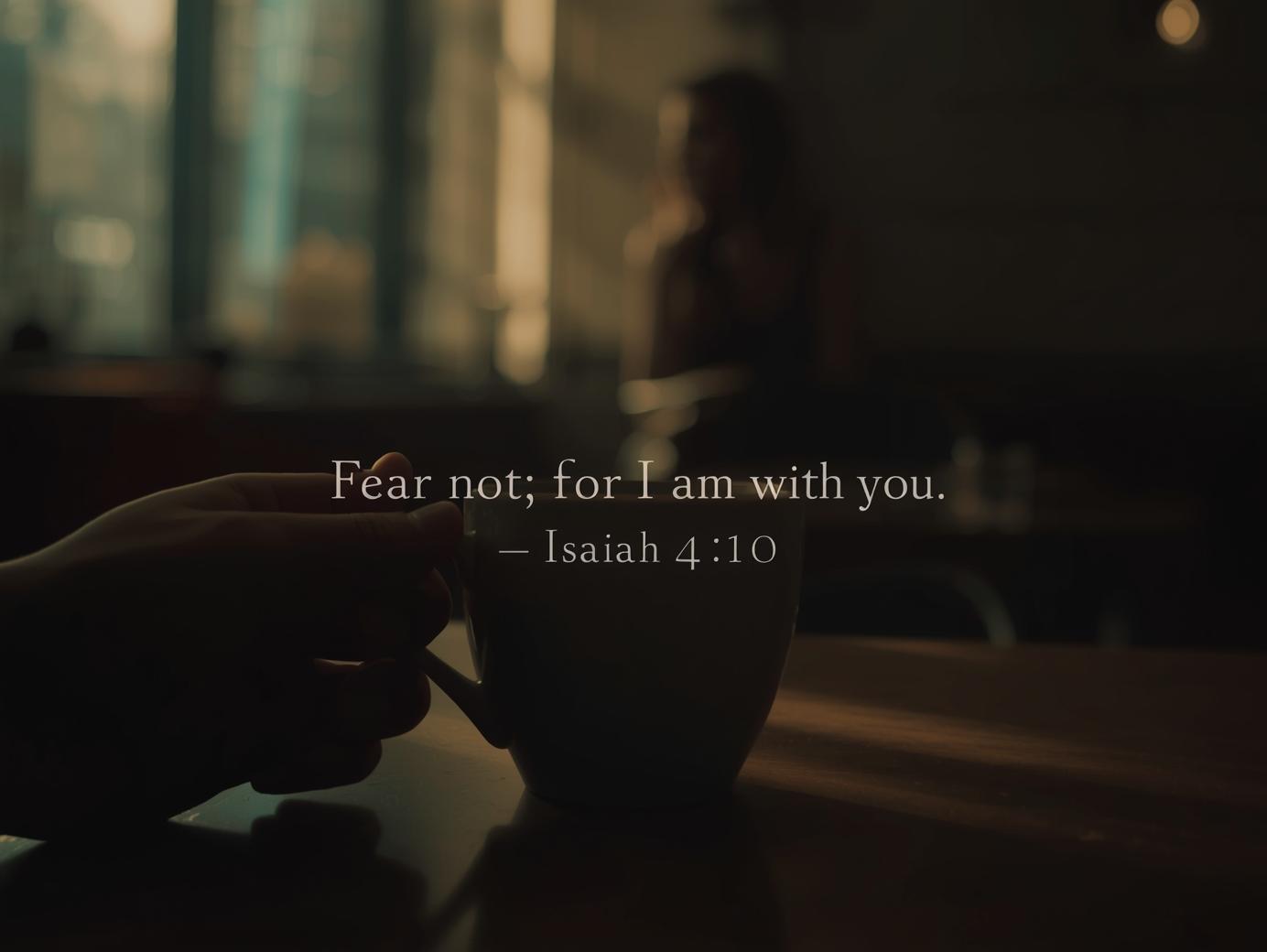
“Fear not, for I am with you; be not dismayed, for I am your God. I will strengthen you, I will help you, I will uphold you with my righteous right hand.” — Isaiah 41:10 (ESV)
Let me tell you what happened today.
I was at this new coffee shop in Cedar Park. First visit. I ordered a burger, took a bite, and immediately thought, “Eh, it’s fine. Not bad, not great. Just fine.”
Later, the owner comes over. Super sweet. Eyes full of hope. He asks, “How was your burger?”
And I smiled and said, “It was good!”
Lie.
Not malicious. Not intentional. But a lie nonetheless. Because it wasn’t good. It was meh.
But I didn’t want to hurt his feelings. Didn’t want to get into a whole thing. Didn’t want the moment to get weird.
So I lied. To make things easier. To avoid discomfort. To sidestep the unknown.
And here’s the thing — I know better. I teach bold truth. I speak with raw honesty for a living. But fear still got me — in that one little moment.
The Small Lies That Cost Us Big
We talk a lot about fear in the big sense — fear of failure, fear of success, fear of rejection.
But what about the micro‑fears?
The ones that show up when someone offers you help and you say, “Oh no, I’m fine.”
The ones that slip in when you say “whatever works for you,” even though you’re already at your edge.
The ones that whisper, “Don’t say that — they’ll think you’re rude.”
We think we’re being polite. But really, we’re being dishonest. And not just to others — to ourselves.
Fear isn’t just a feeling. It’s a way of being. And if you don’t catch it in the small stuff, it will absolutely run your life in the big stuff.
Why This Matters So Damn Much
The most repeated command in the Bible isn’t “love your neighbor”, not "don't mess up”, or “be perfect.” It’s “Do not be afraid.”
But most of us — if we’re being real — live lives built entirely around fear.
Fear of not being enough, not having enough, not doing enough. Fear of being misunderstood, misquoted, misjudged. Fear of being alone. Fear of being seen.
We stay in jobs, relationships, businesses that don’t fit — just because fear tells us it’s safer to stay than start over.
And fear sounds so reasonable.
It wears masks like:
“I’m just being responsible.”
“I don’t want to rock the boat.”
“It’s not a big deal.”
But it is a big deal. Because every time you say something you don’t mean — even something as small as “the burger was good” — you’re reinforcing the idea that your truth is too dangerous to speak. That being honest makes you unsafe. That harmony matters more than integrity. That peace‑keeping matters more than presence.
The Neuroscience Behind the Fear Loop
Let’s pull the curtain back for a sec.
Your brain has a part called the amygdala — it's the alarm bell. It scans for threats 24/7. The problem is: it doesn’t know the difference between actual danger and perceived danger. Your brainstem doesn’t know the difference between a lion chasing you and your inbox full of judgment, bills, or unmet goals. The amygdala lights up the same way.
So when you say “the burger was good” instead of “honestly, I think the flavor could use work” — it’s not logic. It’s a nervous system reflex.
Your brain registers potential rejection, awkwardness, conflict — and pulls the emergency brake.
You freeze. You fawn. You fib.
And then you call it “kindness.” But it’s not. It’s fear.
From Fear to Presence (And How to Practice It)
This isn’t about beating yourself up. It’s about waking up.
So here’s what I’m practicing — and what I’d invite you to try, too:
Catch the small fear‑responses. Not to shame them — just to see them.
Ask: “What am I afraid of here?” Is it disconnection? Discomfort? Disapproval?
Breathe into the gap between the trigger and the response. Even 3 seconds of presence can shift the outcome.
Use Scripture as a nervous system anchor. “Fear not, for I am with you.” Repeat it until your body believes it.
Tell the truth — gently, if needed. But truthfully. Because the world doesn’t need more nice people. It needs more honest people with heart.
Real Talk as a Spiritual Practice
You want to be aligned. On mission. In integrity.
That doesn’t just happen on the big stage or in the coaching call.
It happens at the coffee shop. In the DMs. In the tiny choices no one sees.
“Fear not” wasn’t meant to be a command you shame yourself for failing. It was an invitation to live differently.
Because when you tell the truth — even the uncomfortable kind — you’re not just being bold.
You’re being free.
And the more you practice that?
The less fear runs your life.


