
When "Follow Instructions" Becomes the Interview
Have you ever created a hiring process so clear that only the wrong people ignored it?
I've been running businesses for over 15 years. I've hired. I've fired. I've taught. I've attended seminars. I've read the books.
And yet none of them talk about this part.
The unspoken truth of hiring: The application process is the first performance review.
We're Hiring Right Now
Some of you know we're hiring a virtual executive assistant for MotivAction®.
The position is straightforward. It requires attention to detail. A lot of it.
We created a full job description. Simple application process. Posted it across multiple platforms.
In less than a week: over 250 applications.
Sounds good, right?
Here's what actually happened.
The Five-Item Test
In our job description, we listed five specific items required to be considered:
Resume with three references
One-minute video introduction
Three personality assessments
We stated clearly: "To respect everyone’s time, only complete applications with all requested information will be reviewed."
Out of 250+ applications, only less than 15 sent an email with everything.
Most people just clicked "Apply" through the platform. Didn't read the instructions. Didn't send the email. Didn't include the items.
Out of those 15, ONLY seven made it to the final cut of actually providing everything asked for.
Seven.
Out of 250.
Here's Where the Struggle Comes
I'm sitting at my desk, staring at the incomplete applications. My chest feels tight. Part of me hears the voice: "You're being too rigid. Give them grace. Nobody's perfect."
And that voice is loud.
We even said in our job description:
"We’re not looking for perfect. We’re looking for aligned."
So maybe I should lower my standards, right? If someone didn't provide references, or skipped one assessment, maybe I should still consider them. Give them a chance.
But then I remember what we wrote: "Only complete applications with all requested information will be reviewed."
And I realize: this tension I'm feeling? This is the whole point.
Here's What Most Leaders Miss
The application process isn't about gathering information.
It's about self-selection.
This is a position that requires extreme attention to detail. If you can't be detailed enough to realize you need five items — and those are the five items listed — then it's not the right position for you.
Doesn't mean you're a bad person.
It just means this isn't your role.
And honestly? That saves both of us time.
Because if this is your best effort — when you're trying to get hired, when you're putting your best foot forward — what happens on a not-so-good day?
What happens when you're tired, rushed, overwhelmed?
If your "best" doesn't meet the standard, your "average" definitely won't.
And If We're Honest
This process feels harsh until you realize what it actually does.
It saves me from reviewing 250+ resumes.
It saves candidates from wasting time interviewing for a role they won't succeed in.
It protects my team from hiring someone who will struggle and eventually leave — or worse, stay and underperform.
Strict standards aren't cruelty.
They're clarity.
Check: Think about the last time you hired someone. Did you ignore red flags because you felt bad? Did you give grace where you should have given honest evaluation?
How did that turn out?
But There's Still Room for Grace
Here's the nuance:
Standards ≠ Perfection
We had a couple of people who submitted the full package, but one of the assessments was incomplete. They only provided a screenshot of the first page, missing critical information.
In that case, I reached out: "Thank you for applying. We're missing this piece of information from the assessment. Can you provide it?"
That's grace.
Another person provided their resume in a Google Doc format, editable by anyone. I could literally go in and type whatever I wanted.
Probably not the format you want for a professional resume.
But you know what? That's teachable. If you're detailed enough to figure out what information is needed, I can teach you how to format it properly.
That's the difference.
What I Did Not Tolerate
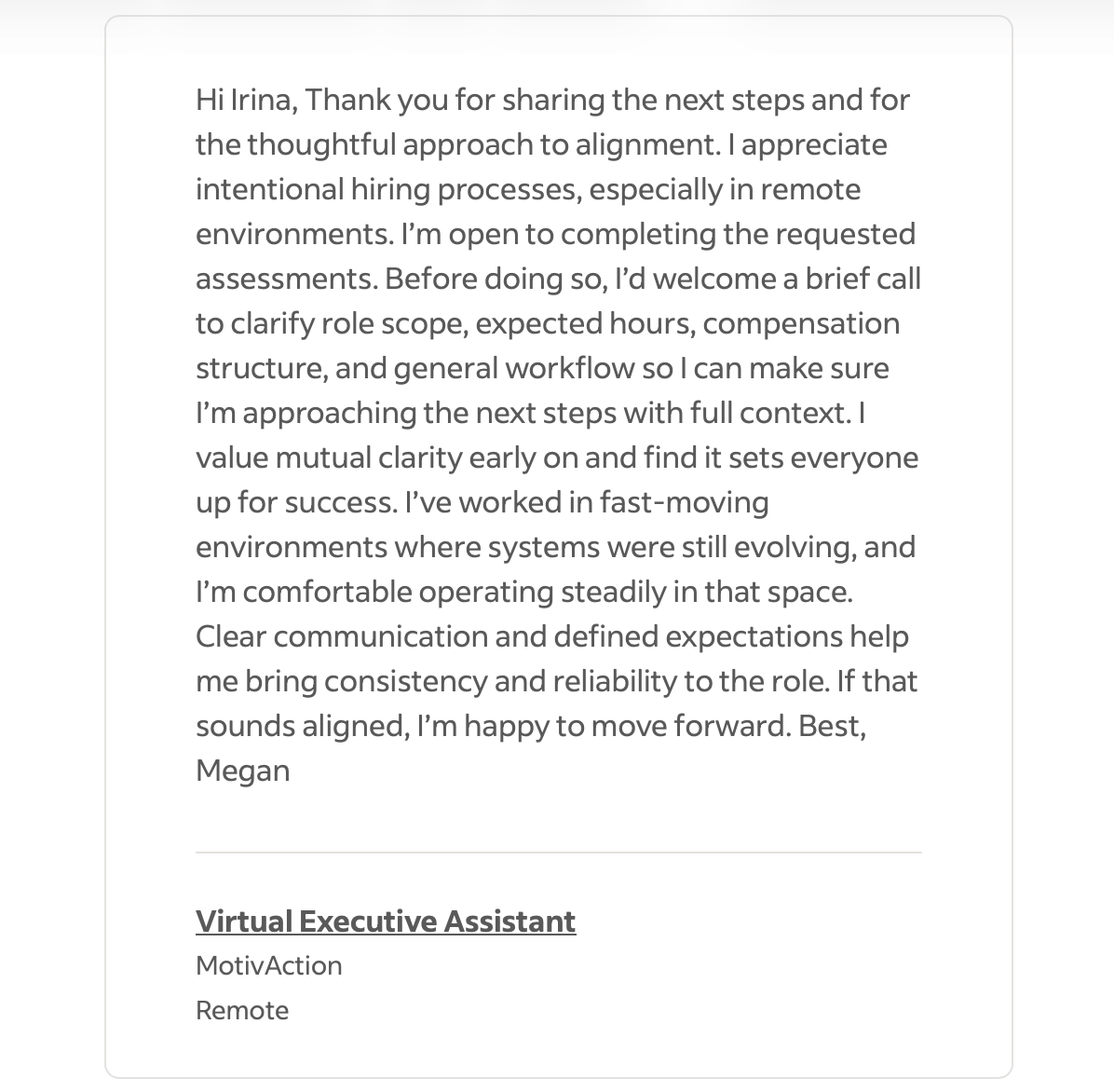
One person asked for a Call before submitting any documents.
My answer is - No.
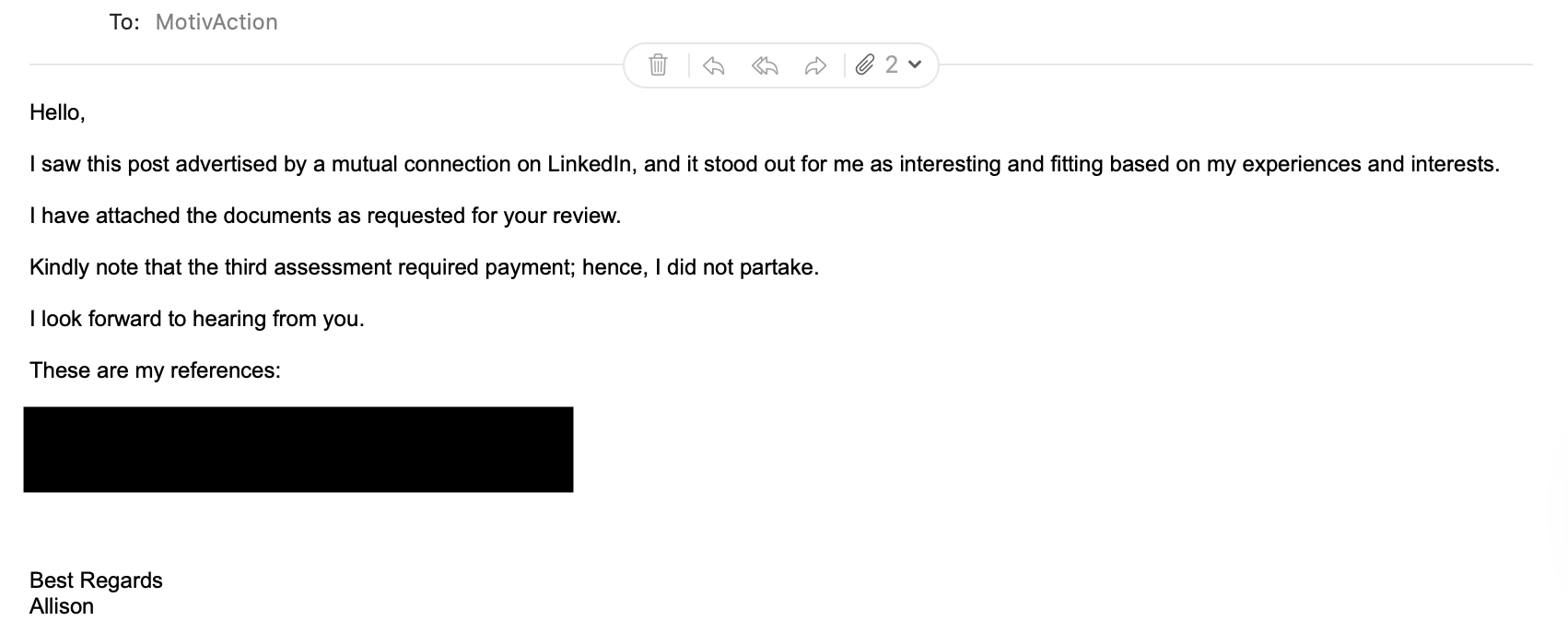
Another person claimed it requires payment to complete one of the assessments.
It doesn't. It's completely free.
That's is not true, and reviels a lack of resourcefulness. Either way—disqualified.
Missing references? No video? Incomplete assessments with no follow-up?
Not considered.
Because here's the truth:
If you can't follow instructions when you're trying to impress me, you won't follow them when you work for me.
The Internal Conflict Leaders Don't Talk About
I'm writing this because I know some of you are wrestling with this too.
You post a job.
You get applicants.
Half of them didn't read the description.
And you feel guilty for having standards.
You wonder: Am I being too picky? Am I missing out on great people because I'm too strict?
But then you remember the last time you hired someone who couldn't follow basic instructions.
How much time you spent redoing their work.
How many conversations you had explaining things that should have been clear.
How exhausted you felt trying to manage someone who required constant supervision.
And you realize:
The hiring process isn't too strict. It's protective.
What Happens If You Lower Your Standards
Because here's what happens when you give grace to incomplete applications: you hire someone who operates at that level.
And then you spend months trying to raise their baseline.
You edit their emails. You redo their calendars. You catch their mistakes before clients see them.
You become their quality control, because they never developed their own.
And the irony? You hired them because you didn't want to be "too strict."
But now you're managing them like they're an intern. Except they're not - they're your executive assistant.
So the strictness you avoided at the beginning? You're living it every single day.
That's not leadership. That's exhaustion.
The Question I'm Asking You
So tell me: Do you think I'm too strict in my process of selecting the right person?
Or is this exactly the right thing to do, and it's actually easier and faster this way?
Because I think we confuse grace with lowered standards.
And I think we confuse strictness with cruelty.
But what if strict standards are actually the kindest thing you can offer?
To yourself — because you're protecting your time and energy.
To your team — because you're not bringing in someone who will drag performance down.
To the candidate — because you're being honest about what the role requires instead of setting them up to fail.
The Leaders Who Last
The leaders who endure are not the ones who hire everyone and hope for the best.
They're the ones who set clear standards and honor them.
Even when it feels uncomfortable.
Even when the applicant pool is small.
Even when people question whether they're being "too picky."
Because they know:
How you hire determines how you lead.
If you compromise at the beginning, you'll compensate forever.
If you're clear at the beginning, you'll lead with ease.
For the Leader Who's Hiring Right Now
Maybe you're in this position.
You posted a job. You got applications. And most of them didn't follow your instructions.
You're wondering if you should just interview them anyway.
Here's my advice: Don't.
Honor your process.
If you said "complete applications only," mean it.
If you required specific items, don't waive them.
Because the people who follow instructions? They're showing you who they are.
And the people who don't? They're showing you that too.
Believe them.
What We're Building at MotivAction®
At MotivAction®, we don't just train leaders to be emotionally intelligent.
We train them to be operationally excellent.
Because emotional intelligence without operational clarity is chaos.
You can be kind and have standards.
You can be compassionate and expect excellence.
You can give grace and still require follow-through.
That's not contradiction.
That's integration.
And if you want to build that in your organization—if you're tired of lowering standards and managing the consequences—we're here.
We train leaders and teams to bridge emotion and execution.
To lead with clarity.
To build cultures where people rise to meet standards instead of standards lowering to meet people.
If this resonates, it's because you've felt the tension too.
You want to hire well. You want to be kind. But you're tired of compromising and paying for it later.
At MotivAction®, we teach leaders how to set standards without apology and lead with both clarity and compassion.
If you're ready to build operational excellence without losing your humanity, we're here.
Learn more at MotivAction.academy.


